What Do Chemical Peels Do? The Real Science Behind Skin Peeling

Your skin looks dull, uneven, or stuck in a breakout cycle that no cream seems to fix. You’ve heard chemical peels fix everything, and also heard stories of raw skin sloughing off in sheets and chemical burns.
The confusion is the problem, because peels are both more routine and more risky than most articles admit.
This guide cuts through it with what peels actually do biologically, who genuinely benefits, and where the real danger sits.
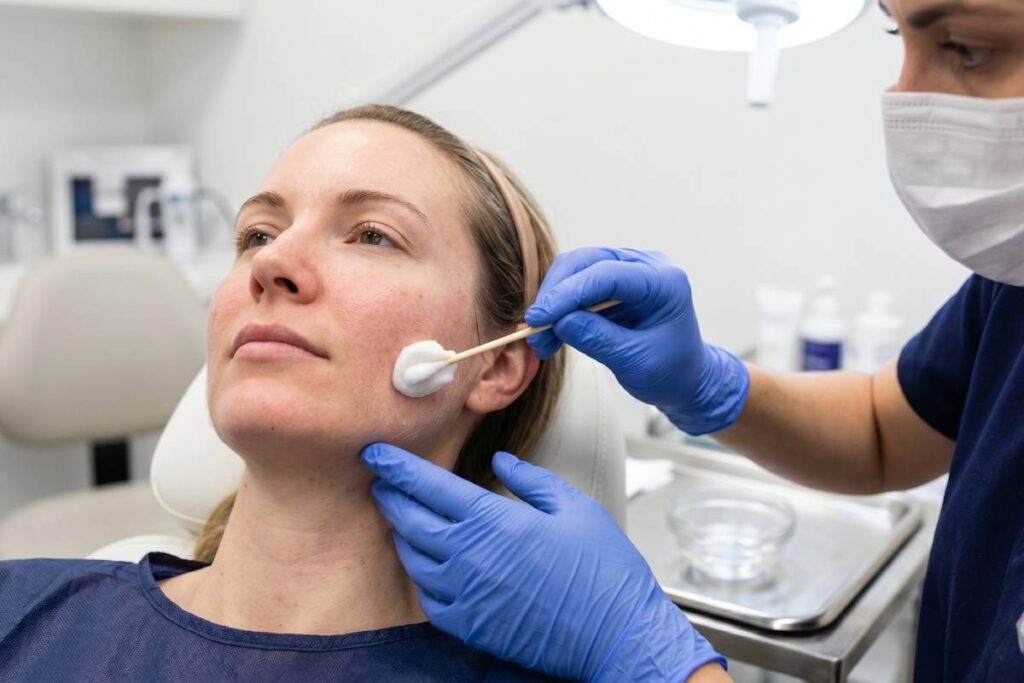
What A Chemical Peel Actually Does To Your Skin
A chemical peel is a controlled chemical injury. An acid solution dissolves the bonds holding dead and damaged skin cells together in the outer layers, forcing those layers to shed faster than they normally would.
Your body reads the acid injury as a wound and kicks off a repair cascade. Fibroblasts ramp up collagen and elastin production, melanocytes reset their pigment distribution, and fresh keratinocytes push up from the basal layer. The result is newer, more organised skin that looks smoother, clearer, and more even in tone.
The depth of that injury determines the result. A superficial peel only loosens the stratum corneum, while a deep peel reaches into the mid-dermis and triggers significant remodelling. Stronger isn’t automatically better; it just changes which problems the peel can solve and how long you’ll recover.
The Three Depths Of Chemical Peels
Not every peel does the same job. Picking the wrong depth is the single most common mistake people make when booking their first treatment.
Superficial peels (AHA and BHA)
These use alpha-hydroxy acids like glycolic or lactic acid, or beta-hydroxy acids like salicylic acid. They work on the epidermis only, dissolving surface cells to improve texture, mild pigmentation, and clogged pores.
You’ll need a series of 4-6 sessions spaced 2-4 weeks apart to see meaningful change. Downtime is minimal, usually some flaking and redness for a few days.
Medium-depth peels (TCA and Jessner’s)
Trichloroacetic acid at 20-35% strength, or Jessner’s solution layered with TCA, reaches the upper dermis. These target moderate sun damage, deeper pigmentation, fine lines, and shallow acne scars.
Recovery runs 7-10 days with visible peeling, redness, and temporary darkening before the new skin surfaces. One treatment often delivers what would take a full superficial peel series to achieve.
Deep peels (phenol)
Phenol-croton oil peels penetrate to the mid-dermis and are reserved for severe sun damage, deep wrinkles, and pre-cancerous lesions. They require cardiac monitoring because phenol is absorbed systemically and can affect heart rhythm.
Downtime stretches 2-3 weeks of intense recovery, and results can last a decade or more. This is a medical procedure, not a spa treatment.
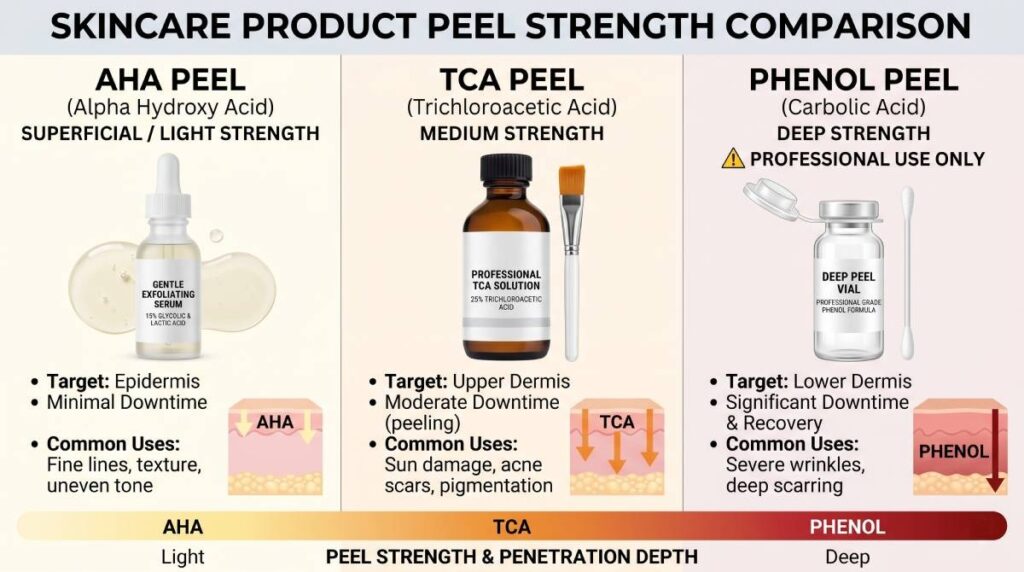
Peel depth comparison
| Peel type | Active ingredient | Depth reached | Best for | Downtime | Typical AUD cost per session |
| Superficial | Glycolic, lactic, salicylic (20-30%) | Epidermis | Dullness, mild pigment, congestion | 1-3 days flaking | $150-$300 |
| Medium | TCA 20-35%, Jessner’s | Upper dermis | Sun damage, melasma, fine lines | 7-10 days | $400-$900 |
| Deep | Phenol-croton oil | Mid-dermis | Deep wrinkles, precancerous lesions | 2-3 weeks | $2,500-$6,000 |
Is Chemical Peeling Good For Your Skin?
Yes, when matched correctly to the skin concern and performed by someone trained. No, when used as a generic “glow-up” for skin that doesn’t need it.
Skin resurfacing procedures, including chemical peels, accounted for more than 3.7 million procedures in 2024, according to the American Society of Plastic Surgeons, which reflects both proven efficacy and a real consumer appetite. That volume alone isn’t proof they’re right for you, but it does mean the protocols are well-established and the risk data is robust.
Peels genuinely help with post-inflammatory hyperpigmentation, melasma, comedonal acne, photoaging, rough texture, and early fine lines. They don’t fix deep wrinkles, atrophic ice-pick scars, sagging, broken capillaries, or rosacea flushing. Those conditions need lasers, microneedling with RF, or injectables.
Consider a realistic scenario:
A 34-year-old woman in Sydney with lingering brown marks from cystic acne visits an Australian Beauty Clinic and books a series of six lactic acid peels at 30% strength, spaced three weeks apart, paired with daily SPF 50+ and nightly vitamin C. By month five, the marks have faded by 60-70%, and her skin tone reads noticeably more even. The same woman trying the same peel for deep boxcar scars would see no change, because the damage sits below the peel’s reach.
Who Should Avoid Chemical Peels
Active cold sores, bacterial infections, or open wounds anywhere on the face rule out peels until healed. The acid can spread the infection and trigger serious flares.
Isotretinoin (Roaccutane) users need to wait at least six months after finishing treatment before medium or deep peels, because the drug disrupts normal wound healing. Pregnant and breastfeeding women should skip salicylic acid and higher-strength peels, though mild lactic acid peels are generally considered safe.
Darker skin tones (Fitzpatrick IV-VI) require extra caution. The risk of post-inflammatory hyperpigmentation or hypopigmentation is significantly higher, and an inexperienced practitioner can cause lasting discolouration. Seek a dermatologist or cosmetic physician with specific experience in skin of colour.
What To Expect During And After
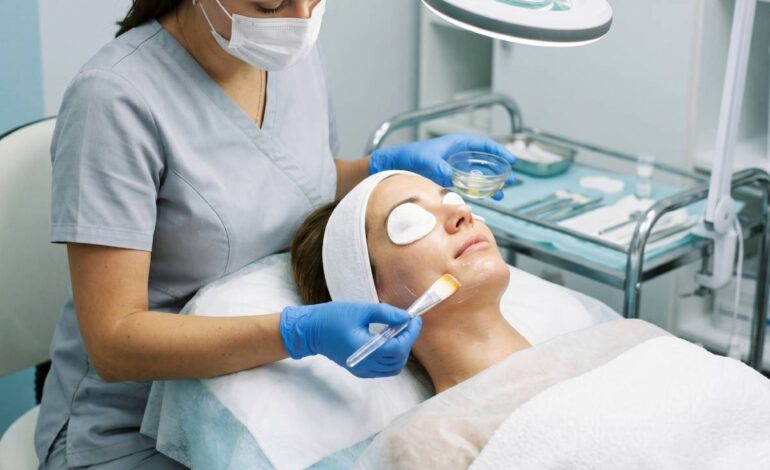
On the day, your skin is cleansed and degreased to ensure even acid penetration. The solution is applied in layers, and you’ll feel tingling, warmth, or a sharp sting depending on the depth.
Superficial peels take 15-30 minutes total, and you walk out with slightly pink skin. Medium peels involve 45-60 minutes, visible frosting (a white cast as proteins coagulate), and a sunburn-like sensation for 24-48 hours.
Aftercare is where most people sabotage their results. Skip actives like retinol, vitamin C, and exfoliants for 5-7 days. Use a bland ceramide moisturiser, wash with lukewarm water only, and apply broad-spectrum SPF 50+ every two hours when outside. Picking at peeling skin causes scarring and pigment changes, so let it shed on its own timeline.
When your skin has finished peeling, and the barrier feels intact, usually day 5-7 for superficial peels, you can choose face make up again, stick to mineral formulas initially, as they sit on top of the skin rather than sinking into a still-sensitive barrier.

The Risks Nobody Tells You Upfront
Post-inflammatory hyperpigmentation is the most common complication, especially in skin tones IV and above. The irony is that a peel meant to treat pigmentation can trigger more if the protocol is too aggressive or aftercare is lax.
Scarring is rare with superficial peels but genuine with medium and deep ones, particularly if you pick at peeling skin or develop an infection during recovery. Herpes simplex reactivation affects people with a cold sore history, so your practitioner should prescribe antiviral prophylaxis before medium or deep peels.
Allergic reactions, persistent redness lasting months, and hypopigmentation (permanent lightening) also appear in the literature. A clinical review published in the Journal of Clinical and Aesthetic Dermatology notes that lasers have largely replaced deep chemical peels due to improved control of ablative depth and fewer systemic side effects, which is why informed practitioners now reserve phenol peels for specific cases rather than treating them as a default.
Conclusion
- Chemical peels work by triggering controlled exfoliation and wound-healing, which boosts cell turnover, collagen production, and pigment regulation.
- The right peel depth depends on the skin concern: superficial for tone and texture, medium for sun damage and melasma, and deep for severe photoaging (rare).
- Peels deliver real results for pigmentation, acne marks, and early ageing, but they carry genuine risks for darker skin tones and poorly matched candidates, which makes practitioner selection more important than the peel itself.
Discussion question: If you’ve had a chemical peel (or been tempted to try one), what was the outcome versus what you were promised going in?